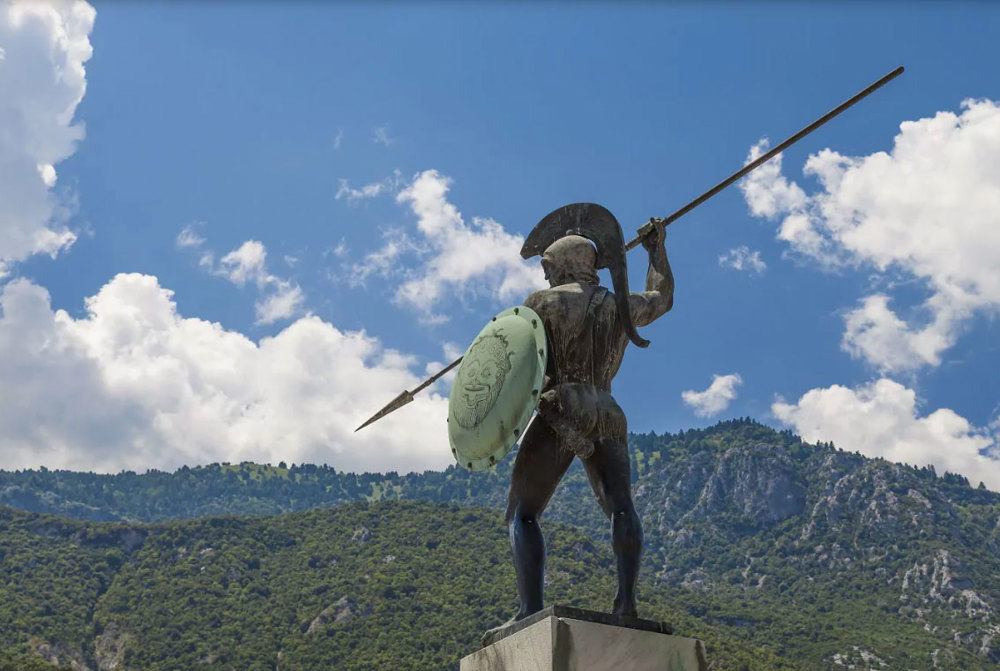
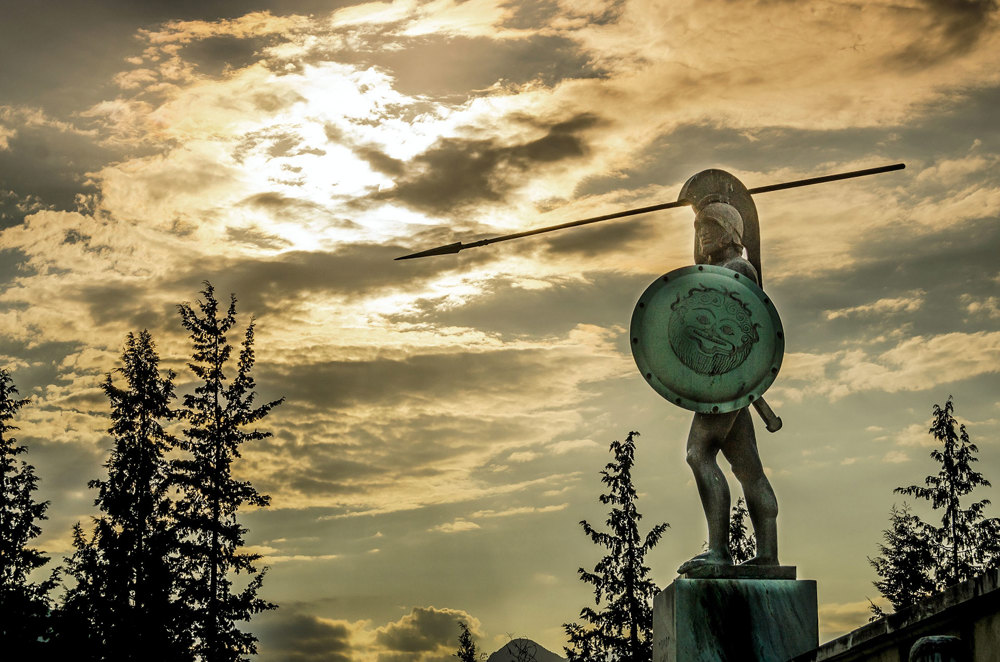
On the third day, a local man named Ephialtes revealed a mountain path that allowed the Persians to outflank the Greek forces. Upon learning this, the Spartan king Leonidas dismissed most of the allied troops so they could regroup further south, remaining at the pass with only selected and volunteer forces. Alongside the famous 300 Spartans, these included approximately 900–1,000 Spartan perioikoi, possibly accompanied by helots, 400 Thebans, and 700 Thespians led by Demophilus, son of Diadromos.
The Persians annihilated the remaining Greek force. After receiving the news, the Greek fleet withdrew from Artemisium and retreated to Salamis, where it later achieved a decisive victory. The Persian invasion ultimately ended after the battles of Plataea and Mycale.
The Battle of Thermopylae stands as one of the most important battles in both Greek and world history. Above all, it is a powerful moral symbol of self-sacrifice, devotion to duty, and loyalty to one’s homeland. It demonstrated the advantages of Spartan military training, superior equipment, and the strategic use of terrain.
At the time of Leonidas in 480 BC, the pass was an extremely narrow path—approximately 12 meters wide—beneath the hillside, which the Greeks sought to exploit strategically to halt the vastly superior Persian forces. Today, due to sediment deposits from the Spercheios River, the width of the pass ranges from 1.5 to 3 kilometers.
The hot springs, from which Thermopylae derives its name, still exist at the foot of the hill.
Finally, as poet Constantinos Cavafy wrote, “Honor to those who in their lives define and guard Thermopylae,” the name Thermopylae has come to symbolize faithfulness to principles and values, and the pursuit of high ideals.