Beyond the archaeological site and museum, visitors can also explore, at the southeastern edge of the town, the house of Eva and Angelos Sikelianos, which today operates as a museum dedicated to the Delphic Festivals.
West of Delphi, on the road toward Itea, begins a 2-kilometer walking route leading to the location known as “Balcony of Hosios Loukas / Pavilion.” At the end of this route, the ancient table of the first temple dedicated to Hosios Loukas, who was born in Delphi, is preserved. Delphi is also home to the main facilities of the European Cultural Centre of Delphi. On its southern side lies an open-air sculpture park, featuring works by Greek and international artists such as Takis, Varotsos, Tsoclis, Zongolopoulos, Patsoglou, Gerard, Saiz, Romano, Reynaud, Noda, and others.
You may also stroll through the town’s market, with its numerous tourist shops, hotels of all categories, restaurants, and taverns, as well as banks and travel agencies available to serve visitors’ needs.
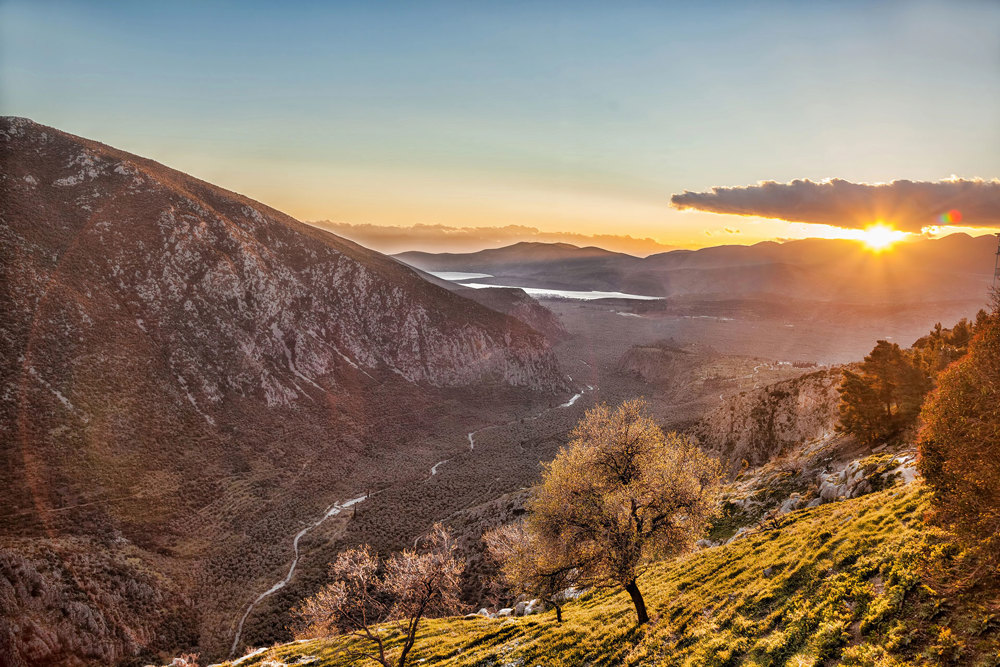
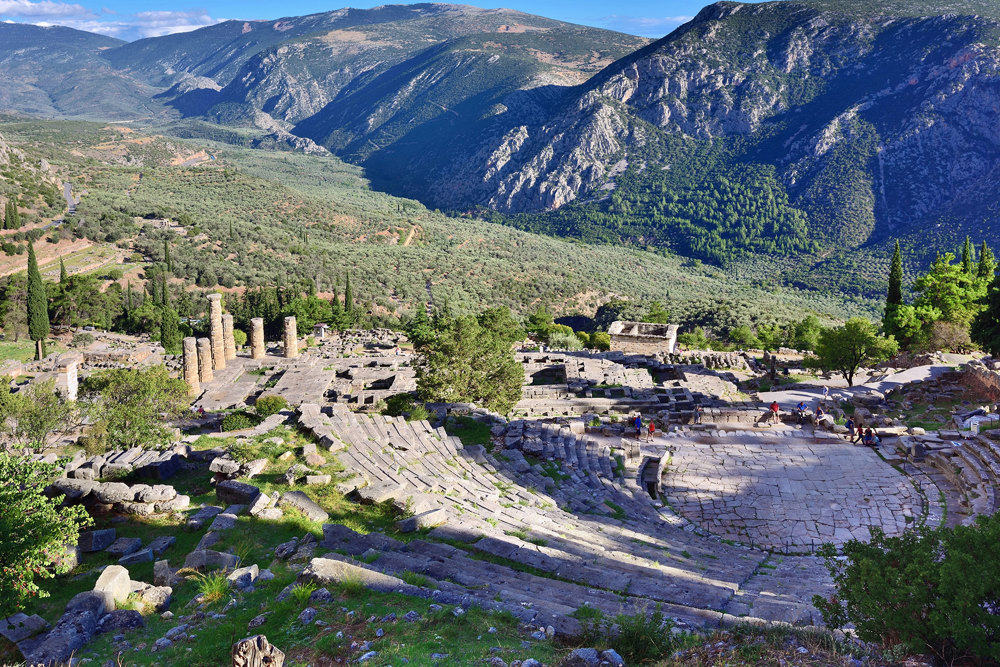
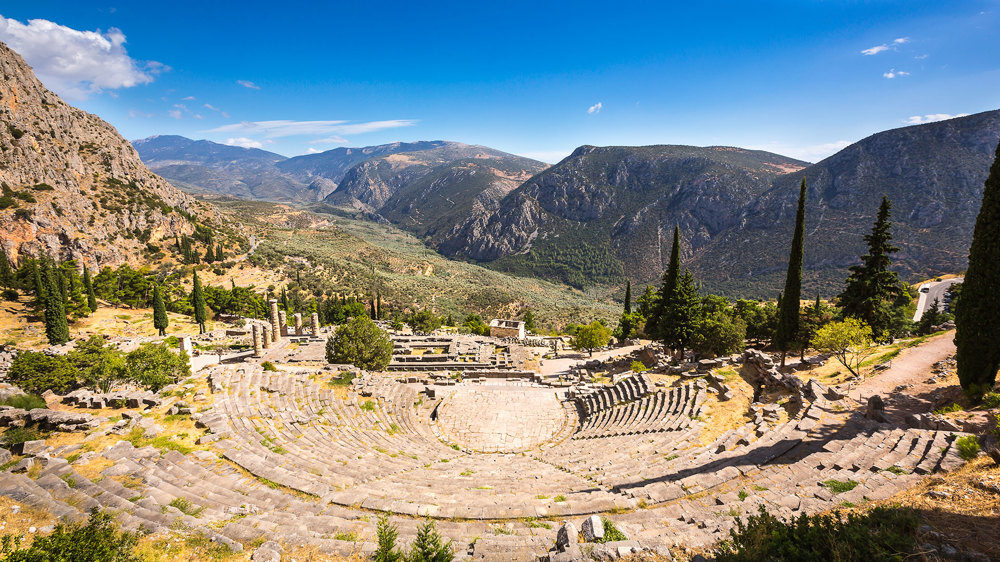
By following the ancient path now internationally known as the E4 European Trail, you can enjoy a scenic hike that leads toward higher elevations. A stop above the Phaedriades cliffs offers a breathtaking view: below lies the archaeological site, beyond it the olive groves of Chrisso and Amfissa, and in the distance Itea and Galaxidi. On clear days, the view extends as far as the coasts of the Peloponnese, offering a unique combination of mountain and sea.
Continuing further, you will reach the area of Kroki and, shortly afterward, Paliopanagia, where the Corycian Cave is located at an altitude of 1,360 meters. This sacred cave was dedicated to the worship of Pan and the Nymphs and remains one of the most evocative sites in the region.