Summer Winter
Light
Call usCall us +30 2267 032661

Livadeia

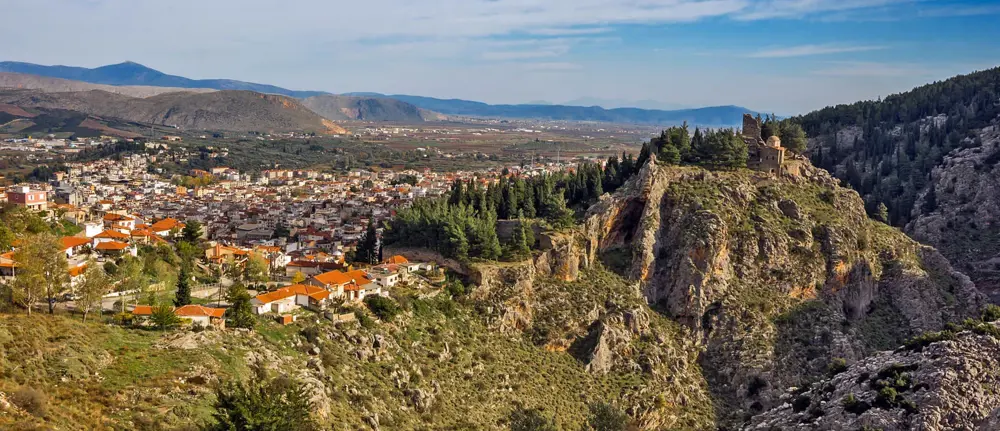
Livadeia is the capital of the regional unit of Boeotia, built on the northern foothills of Mount Helicon, and lies 33 km from Arachova. According to mythological tradition, it was founded by the Athenian hero Lebados and was renowned in antiquity for the Oracle of Trophonius. From the 8th century BC, Livadeia was part of the Boeotian League, while it suffered destruction by the Spartan Lysander in 395 BC and by the army of Mithridates in 86 BC. In the centuries that followed, the city endured barbarian invasions and various conquerors, until it was captured by the Ottomans in 1460.

During the Greek War of Independence in 1821, Livadeia was among the first cities of Roumeli (Central Greece) to rise in revolt, under the leadership of Athanasios Diakos.

Livadeia was incorporated into the modern Greek state in February 1829. The contemporary town, located in the heart of a fertile plain, is an important agricultural center—with cotton as its main product—as well as a regional commercial hub.

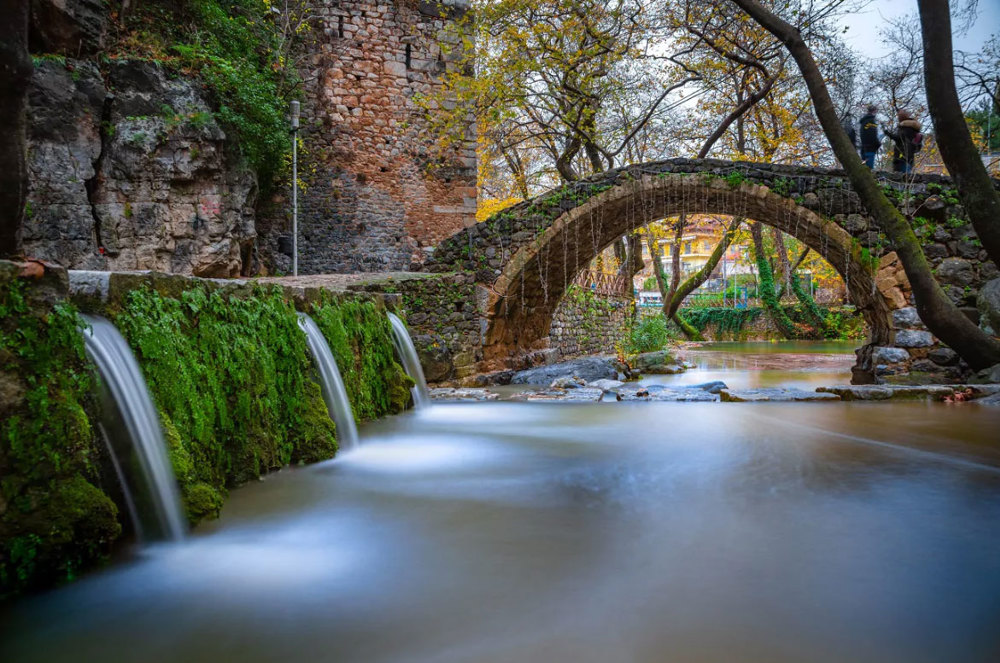
Stone arched bridge over Herkyna stream with small waterfalls in Livadeia

During your visit to Livadeia, worthwhile sights include:

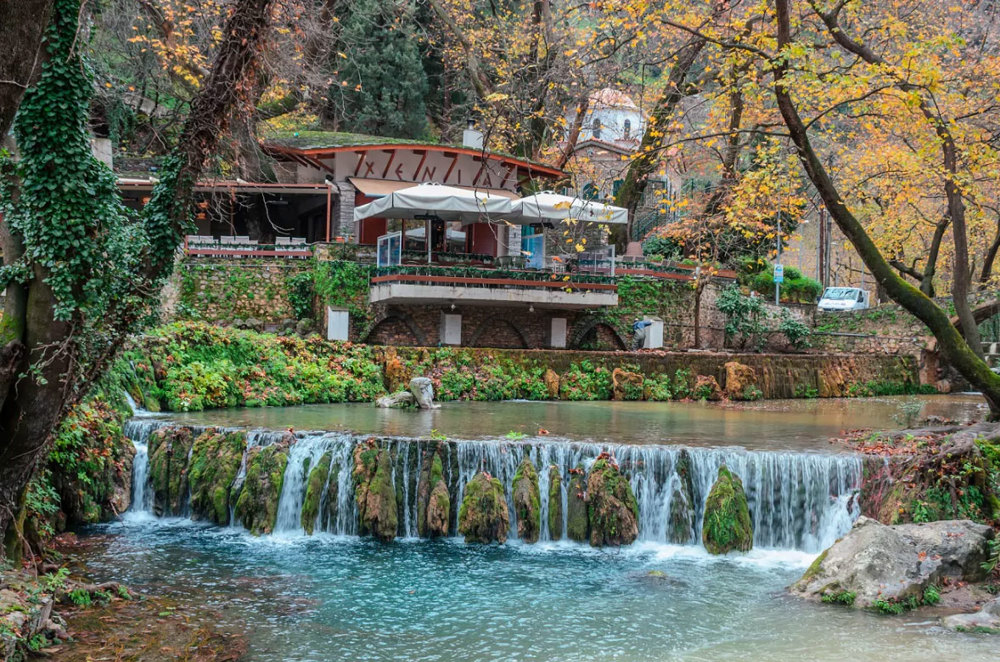
  • Krya Springs, a lush area filled with trees and flowing waters, through which the Herkyna River runs. Krya is renowned for its numerous small waterfalls, dense vegetation, stone bridges, and overall natural beauty.
  • The stone theater of Krya, set within this picturesque landscape.
  • The ancient springs of Lethe and Mnemosyne, along the Herkyna River, which continue to supply the city with water to this day.
    The ruins of the Oracle of Trophonius, one of the most mysterious sanctuaries of antiquity.
  • The Byzantine castle, later expanded by the Franks and the Catalans.
  • The chapel of Prophet Elias, built near the ruins of the ancient Temple of Zeus Basileus.
  • The chapel of Agia Ierousalim, located inside the cave of the Life-Giving Spring, next to the chapel of Agios Minas.
  • The Monastery of Lykouresi, whose roof—once made of lead—was used during the Ottoman period for the production of ammunition.
  • The Clock Tower, constructed during the period of Frankish rule and originally used as a beacon. A historically inaccurate local legend claims that in 1803 Lord Elgin donated a clock to the city in order to prevent local leaders from obstructing his excavations at the Oracle of Trophonius. The clock was placed on the tower due to its prominent position and remains one of Livadeia’s most recognizable landmarks.
  • Livadeia combines rich mythology, layered history, and impressive natural scenery, making it a rewarding destination for visitors exploring Central Greece.