Summer Winter
Light
Call usCall us +30 2267 032661

Arachova

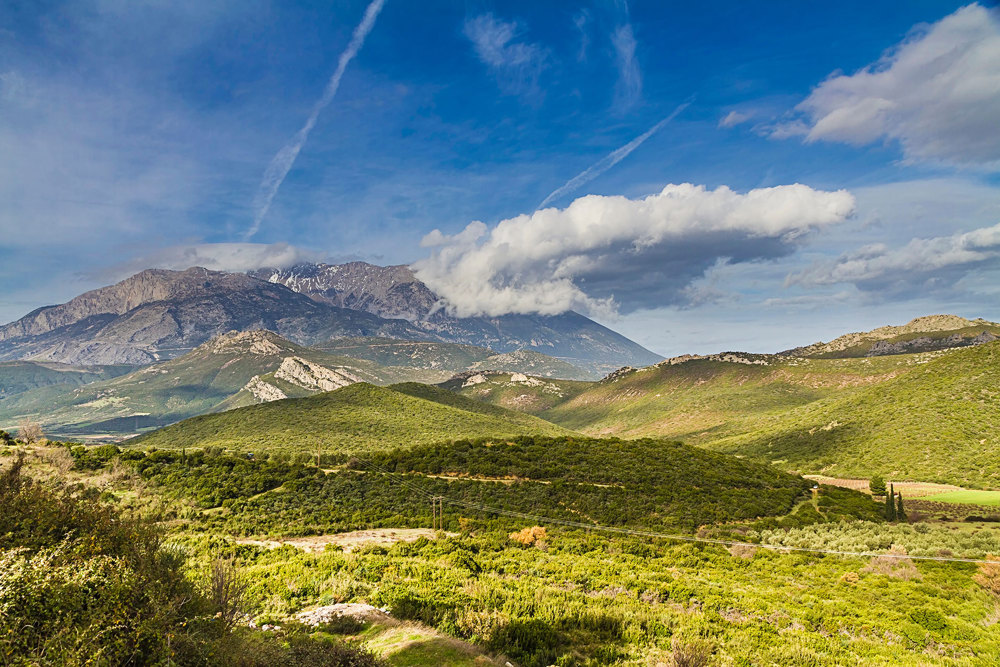
Arachova, also known as Rachova during the period of Ottoman rule, is located on the southern slopes of Mount Parnassus, in a region of profoundly ancient history. The town is built amphitheatrically on five neighboring hills: Koumoula, Sfalaki, Koutrouli, Agios Georgios, and Afanos. The present-day settlement was most likely first established during the period of Frankish rule, around 1300 AD.

Over the centuries and up to the present day, Arachova has played an important role in history and culture.
The earliest known description of the settlement dates to about twenty years before the Fall of Constantinople and was written by the renowned Italian archaeologist Ciriaco of Ancona. This was followed by numerous travelers on their way to Delphi, almost all of whom expressed admiration for Arachova’s picturesque setting and natural landscape. Their accounts went beyond its natural beauty, highlighting the elegance of the traditional folk costumes and the intricate woven textiles of Arachova. Later, Greek visitors also recorded the distinctive characteristics of the local people: their mountainous dialect, the beauty of the women, and the strong, impressive stature of the men.

Nationwide, Arachova became famous in 1826 because of the historic Battle of Rachova, in which Georgios Karaiskakis won a decisive victory against the army of Mustafa Bey, a battle that quite literally helped save the Greek War of Independence.

Arachova, often described as the natural balcony of Mount Parnassus, is considered one of the most beautiful mountain towns in Greece, with a rich history and a strong cultural heritage. Its natural beauty, combined with the development of the Parnassos Ski Resort in recent decades, attracts many visitors,both Greek and international,who choose Arachova for leisure, entertainment, and relaxation.


Scenic view of Arachova village built on the mountain slope with stone houses, green hills, and blue sky

Visitors arriving in Arachova usually begin their walk along the main street, lined with numerous shops, cafés, bars, and restaurants. Here, they can purchase local products and relax while enjoying a coffee or a meal. Along this central road, one can admire many preserved stone-built buildings from the 19th century, including the Town Hall, located in the heart of the town.

Continuing along the public road toward Athens, and just a short distance from the Town Hall on the right-hand side, visitors encounter a beautiful neoclassical building with stone columns. This is the former elementary school of Arachova, built in 1910 with financial support from Andreas Syngros. The school ceased operation in 2003 and today houses the Folklore Museum and workshops dedicated to traditional crafts.

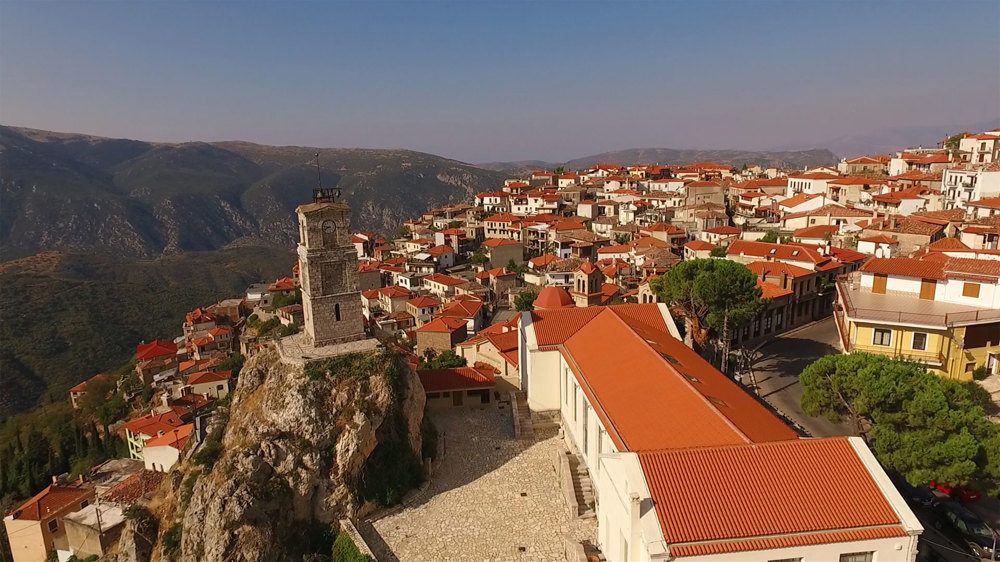
Behind the museum rises an imposing, steep rock covered in ivy, known as the “Clock Tower.” This tower, crowned with a clock, is the town’s most recognizable landmark and is closely linked to its history. In earlier times, locals referred to it as the “bell tower,” as it once held the bell tower of the Church of the Presentation of the Virgin Mary. Following a major earthquake in 1870, the original bell tower collapsed, and the current clock tower was built in its place at the expense of Gregorios Kambasinos, a native of Arachova and abbot of the Monastery of Hosios Loukas.


Picturesque Arachova village with red-roofed houses and the iconic stone clock tower

At this point in your walk, you can also visit the Metropolitan Church of Arachova, located right next to the Folklore Museum, as well as the post-Byzantine chapel of Saint John, adorned with frescoes from the 17th -18th centuries, and the small chapel of the Evangelist, dedicated to Archangel Gabriel. These chapels are situated beneath the Clock Tower.

Near the Town Hall, you will find the stone staircase with 264 steps, known locally as “Agkarsios,” which leads up to the Church of Saint George.

The church, built at an altitude of 1,000 meters, is visible from almost every point in the village and is closely connected to the Battle of Arachova and Georgios Karaiskakis. On the northern wall of the church enclosure, small openings are still preserved—used by Greek fighters to aim their rifles at the opposing Ottoman-Albanian forces camped on the opposite hill, now known as “Moustambey.”

Visitors may also see the marble monument dedicated to the Arachovites who “fell for sacred causes,” a work by sculptor Georgios Synnefas (1914), located in the square of the former “Xenia” Hotel. Further west, on the road to Delphi, stands the marble bust of Georgios Karaiskakis, created by sculptor N. Georgantis and unveiled on August 26, 1930.

Finally, visitors are encouraged to wander through the narrow alleys of Arachova and admire the stone-built houses—fine examples of the craftsmanship and architectural skill of the town’s master builders.